

Modern fertility preservation relies on advanced laboratory techniques to maintain egg viability over time. Life IVF Center utilizes these specific technologies to help patients in Orange County and Los Angeles protect their future family-building options. Understanding these methods helps you make informed decisions about your reproductive health.
1. Vitrification for Rapid Cooling
Vitrification is the standard method for freezing eggs without ice crystal formation. This technique involves cooling eggs at an extremely rapid rate to turn them into a glass-like state. By avoiding ice crystals, vitrification significantly reduces the risk of cellular damage during the freezing process. Most top clinics, including Life IVF Center, use this method as the primary approach for oocyte cryopreservation.
2. In-House Embryology Laboratories
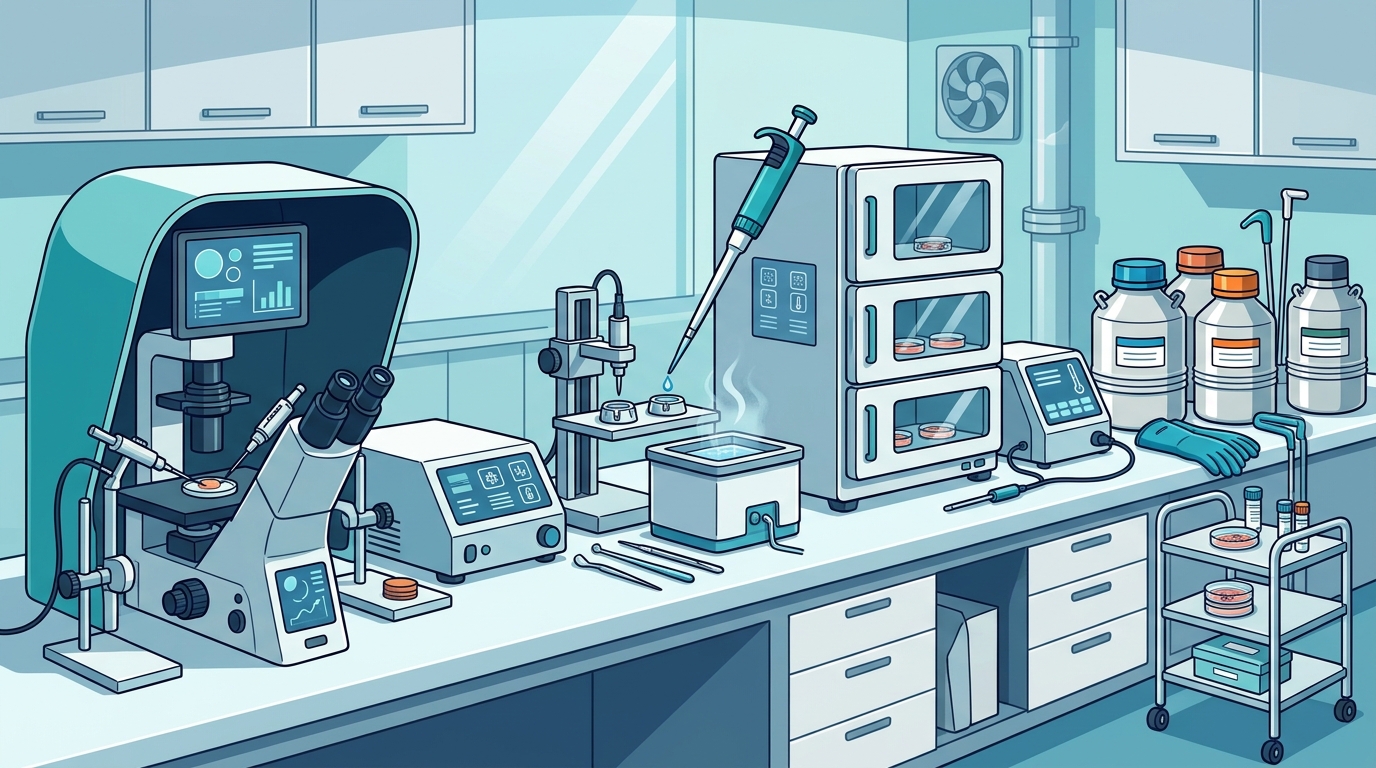
On-site labs ensure consistent handling and immediate processing of retrieved eggs. Life IVF Center operates in-house embryology laboratories at both its Irvine and Arcadia locations. This setup allows embryologists to process eggs immediately after retrieval, minimizing the time between procedure and freezing. Consistent lab environments are critical for maintaining high survival rates during the thawing process.
3. Personalized Stimulation Protocols
Custom medication plans optimize egg yield based on individual ovarian reserve. Precision IVF focuses on tailoring stimulation to each patient's biology rather than using a one-size-fits-all approach. Physicians at Life IVF Center evaluate factors like age and hormone levels to design a protocol that balances egg quantity with quality. This individualized care helps patients achieve the best possible results for their specific circumstances.
4. Ultrasound-Guided Egg Retrieval
5. Cryopreservation Storage Systems
Secure, temperature-controlled storage maintains egg integrity for long-term preservation. Frozen eggs are stored in liquid nitrogen tanks at ultra-low temperatures to halt all biological activity. Life IVF Center offers flexible storage options, including annual, monthly, and prepaid plans. These systems are designed to keep eggs viable for years, allowing patients to decide on their timeline for family building.
6. Digital Patient Portals
Secure online platforms allow patients to track their fertility journey and lab results. Life IVF Center provides a patient portal where individuals can access messages, lab results, and medical reports. This technology streamlines communication between patients and their care teams, ensuring everyone stays informed throughout the cycle. It is particularly useful for patients coordinating care from a distance or managing multiple appointments.
7. Remote Cycle Monitoring
Outside monitoring allows patients to complete blood work and ultrasounds locally. For patients traveling to Orange County, Life IVF Center offers a program where local providers perform routine monitoring. The results are then sent to the Life IVF nursing team to adjust the treatment plan remotely. This technology reduces the need for frequent travel while maintaining the precision of the clinical protocol.
Choosing the Right Technology for Your Needs
Selecting the right clinic depends on how well their technological infrastructure aligns with your specific medical history and lifestyle. Look for providers who offer transparent data on their lab practices and flexible monitoring options. At Life IVF Center, the combination of in-house labs and personalized protocols ensures that your preservation plan is built around your unique biology.
Frequently Asked Questions
How long can frozen eggs remain viable?
Current research suggests that eggs frozen using vitrification can remain viable for many years. There is no definitive expiration date, but egg quality is determined by the age at which they were frozen. Patients should discuss their specific timeline with a fertility specialist to understand the best approach for their situation.
Does egg freezing guarantee future pregnancy?
No, egg freezing does not guarantee a future pregnancy or live birth. The success of using frozen eggs depends on factors such as age at freezing, egg quality, and the health of the uterus at the time of transfer. It is a tool for preserving options, not a guarantee of parenthood.
What is the difference between vitrification and slow freezing?
Can I monitor my cycle if I live far from the clinic?
Yes, many clinics, including Life IVF Center, offer outside monitoring programs. This allows patients to have blood work and ultrasounds performed by local providers near their home. The results are shared with the main clinic team to ensure the treatment plan remains on track without requiring constant travel.
How many eggs should I aim to freeze?
The target number of eggs depends on your age and ovarian reserve. Younger patients may need fewer eggs to achieve a good chance of pregnancy, while older patients may need more. A fertility specialist can provide a personalized estimate based on your specific medical profile and goals.
Start Your Fertility Preservation Journey
Ready to explore your options? Book a free consultation with a Life IVF Center clinician to discuss how these technologies can work for you. Our team is dedicated to providing honest guidance and personalized care for your family-building goals. Learn more: Meet Your Team Life.