

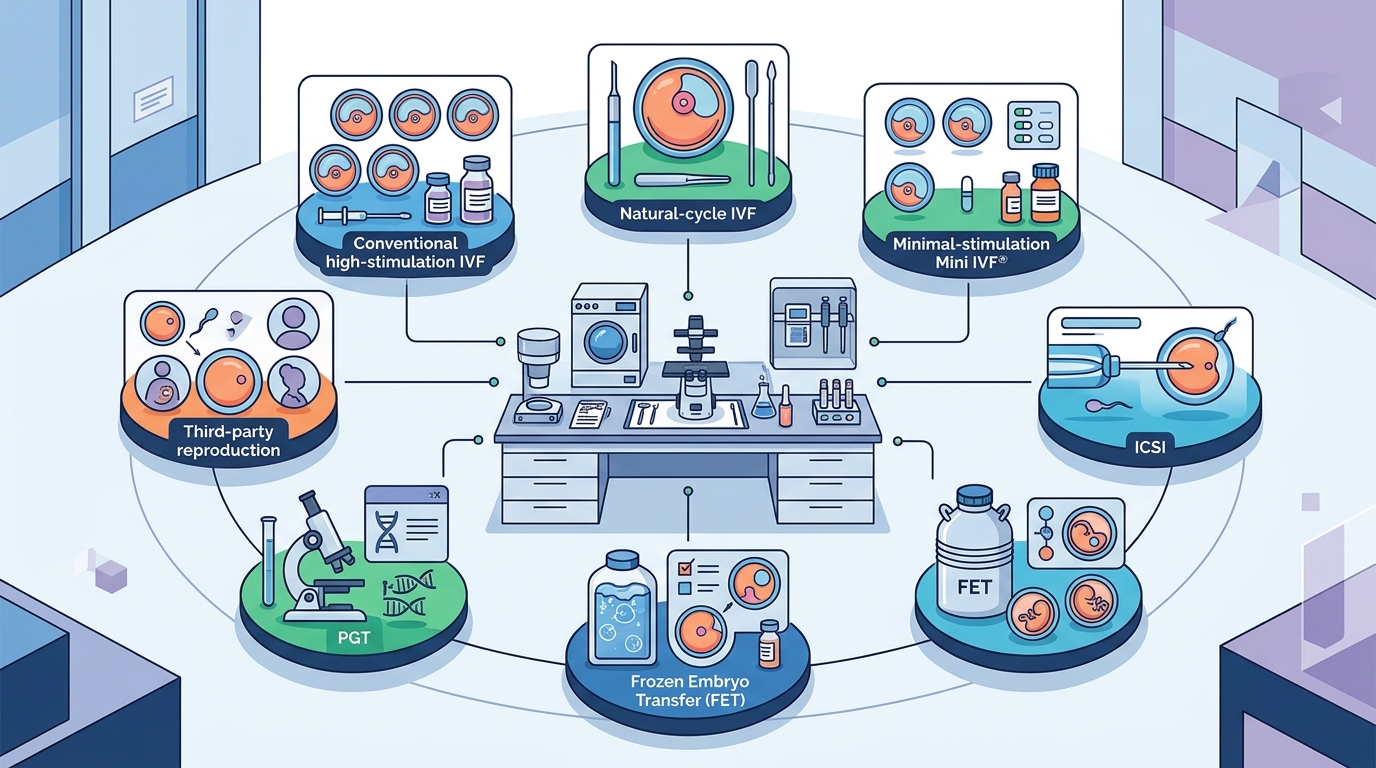
Patients in Orange County have access to a diverse range of in vitro fertilization (IVF) strategies tailored to their specific medical profiles. Life IVF Center and other regional providers offer personalized protocols that move beyond a one-size-fits-all model. These approaches allow individuals and couples to select treatments that align with their health, budget, and family-building goals.
1. Conventional High-Stimulation IVF
Conventional IVF uses high doses of gonadotropins to maximize the number of eggs retrieved in a single cycle. This approach is often recommended for patients with good ovarian reserve who can tolerate significant medication. The goal is to create multiple embryos, increasing the chances of a successful transfer. While effective, it requires frequent monitoring and can be physically demanding. For additional details, review the Patient Portal.
2. Minimal-Stimulation IVF (Mini IVF)
3. Natural Cycle IVF
Natural cycle IVF relies on the body's natural hormonal fluctuations to retrieve a single egg without exogenous stimulation. This method eliminates the need for injectable hormones, making it an attractive option for patients who are sensitive to medication. It is often used in conjunction with other approaches to maximize the number of embryos available for transfer. For additional details, review the .
4. Intrauterine Insemination (IUI)
IUI is a less invasive fertility treatment that places washed sperm directly into the uterus during ovulation. While not technically IVF, it is a common first-line treatment offered by Orange County clinics for mild male factor infertility or unexplained infertility. It serves as a stepping stone before considering more complex laboratory procedures. For additional details, review the Customer Experience.
5. Intracytoplasmic Sperm Injection (ICSI)
ICSI involves injecting a single sperm directly into an egg to facilitate fertilization, addressing severe male factor infertility. This advanced reproductive technology is often paired with IVF cycles when standard insemination is not viable. It allows for the use of sperm retrieved through surgical procedures or from samples with very low counts.
6. Preimplantation Genetic Testing (PGT)
PGT screens embryos for chromosomal abnormalities before transfer, improving implantation rates and reducing miscarriage risk. This approach is highly beneficial for patients with advanced maternal age or a history of recurrent pregnancy loss. It ensures that only genetically normal embryos are selected for transfer, optimizing the chances of a healthy pregnancy.
7. Frozen Embryo Transfer (FET)
FET involves transferring previously created and frozen embryos in a separate cycle from egg retrieval. This approach allows for careful preparation of the uterine lining and decoupling of the stimulation phase from the transfer phase. It is a standard component of modern IVF care, providing flexibility and potentially better outcomes.
Choosing the Right Approach
Selecting the appropriate IVF approach depends on individual factors such as age, ovarian reserve, and medical history. Patients should consult with a reproductive endocrinologist to determine which protocol aligns best with their specific circumstances. A personalized treatment plan ensures that the chosen method is both medically appropriate and aligned with personal preferences.
Frequently Asked Questions
What is the main difference between Mini IVF and conventional IVF?
Is Natural Cycle IVF suitable for everyone?
Natural Cycle IVF is not suitable for everyone. It is generally recommended for patients who cannot tolerate medication or have specific hormonal profiles that make natural ovulation predictable.
How does ICSI help with male factor infertility?
ICSI helps by directly injecting a single sperm into an egg, bypassing the need for the sperm to penetrate the egg on its own. This is crucial for cases of low sperm count, poor motility, or abnormal morphology.
What is the purpose of Preimplantation Genetic Testing?
The purpose of PGT is to identify chromosomal abnormalities in embryos before transfer. This helps select the most viable embryos, reducing the risk of miscarriage and genetic disorders.
Can I choose to freeze my embryos for later use?
Yes, many patients choose to freeze extra embryos created during an IVF cycle. This allows for future transfers without the need for another egg retrieval procedure.
Next Steps
Understanding the various IVF approaches available in Orange County is the first step toward making informed decisions about your fertility journey. Life IVF Center offers personalized consultations to help you navigate these options with confidence. Reach out to schedule a free consultation to discuss which approach may be right for you.