

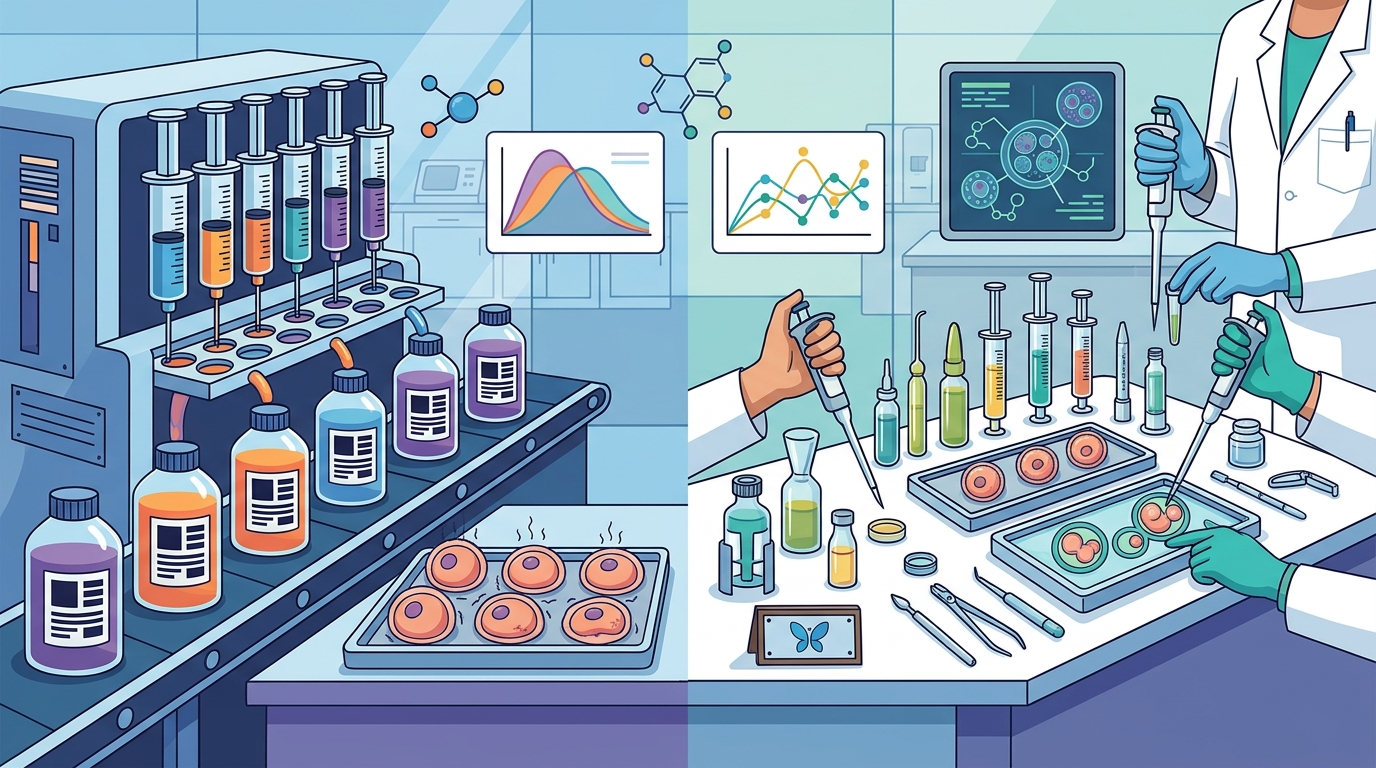
Specialized low AMH treatment focuses on individualized protocols tailored to diminished ovarian reserve, whereas standard fertility clinic approaches often utilize standardized, high-stimulation regimens. At Life IVF Center, we prioritize a personalized strategy that adapts to your specific ovarian reserve levels. This approach aims to optimize egg retrieval and embryo quality without the rigid constraints of a one-size-fits-all model. For additional details, review the lifeivfcenter com.
Understanding Low AMH and Ovarian Reserve
Anti-Müllerian Hormone (AMH) is a protein produced by the ovarian follicles that serves as a primary marker for ovarian reserve. Low AMH levels indicate a diminished pool of remaining eggs, which can impact the response to fertility treatments. Diminished ovarian reserve (DOR) is a condition where the ovaries contain fewer eggs than expected for a woman's age. This condition is not a diagnosis of infertility in itself, but it does influence the strategy required for successful conception. For additional details, review the Frequently Asked Questions.
Patients with low AMH often face challenges in conventional stimulation protocols. The ovaries may not respond adequately to high doses of gonadotropins, leading to a lower number of retrieved oocytes. Understanding this biological reality is among the first step in selecting an appropriate treatment plan. It shifts the focus from simply maximizing egg quantity to optimizing the quality of the available eggs.
Standard Fertility Clinic Approaches
In a standard setting, the primary goal is often to retrieve as many eggs as possible. However, for patients with diminished reserve, aggressive stimulation may yield few eggs or result in poor-quality oocytes. The standard approach may not adequately account for the individual's specific hormonal profile or previous treatment responses. This can lead to cycles that are physically demanding and financially costly without yielding viable embryos.
Specialized Low AMH Care Strategies
Specialized low AMH treatment involves a tailored medical strategy designed specifically for patients with diminished ovarian reserve. This approach often utilizes lower-dose stimulation protocols, such as minimal-stimulation IVF or natural-cycle IVF. The goal is to work with the ovaries' natural capacity rather than forcing a response that may not be sustainable. By reducing the medication load, these protocols can sometimes improve the quality of the retrieved eggs.
At Life IVF Center, our Precision IVF approach emphasizes individualized care for complex cases. We assess each patient's unique hormonal landscape, including AMH, FSH, and antral follicle count. This data-driven method allows us to select the most appropriate stimulation protocol for each individual. The focus is on achieving a successful pregnancy with the least invasive and most effective method available for that specific patient.
Comparing Clinical Outcomes and Patient Experience
Patient experience is a critical component of the treatment journey. Standard protocols can involve significant hormonal side effects, including bloating and mood changes. Specialized approaches may reduce these burdens, allowing patients to maintain their daily lives with less disruption. The financial aspect also differs, as lower-dose protocols may reduce medication costs, though the total cost of care depends on the number of cycles required.
Choosing the Right Path for Your Journey
Key Takeaways
- Low AMH indicates diminished ovarian reserve, requiring a tailored treatment strategy.
- Standard high-stimulation protocols may not be optimal for patients with low AMH.
- Individualized treatment focuses on egg quality rather than just quantity.
- Patient experience and side effect profiles differ significantly between standard and specialized approaches.
- Choosing a provider with expertise in diminished ovarian reserve is critical for success.
Frequently Asked Questions
What does low AMH mean for my fertility treatment?
Low AMH suggests a smaller pool of remaining eggs, which may affect how your ovaries respond to stimulation. It does not mean you cannot conceive, but it requires a customized treatment plan to optimize outcomes.
Is minimal-stimulation IVF better for low AMH patients?
Minimal-stimulation IVF can be a suitable option for some low AMH patients, as it may reduce side effects and medication costs. However, the best protocol depends on your specific medical profile and goals.
How does Life IVF Center approach low AMH cases?
Life IVF Center uses a Precision IVF approach, tailoring treatment to each patient's unique hormonal profile and medical history to ensure the most effective and comfortable care.
Can I still have a baby with low AMH?
Yes, many women with low AMH successfully conceive using IVF. The key is working with a specialist who can design a protocol that maximizes the quality of the available eggs.
What is the difference between standard and specialized IVF protocols?
Standard protocols typically use high doses of hormones to retrieve many eggs, while specialized protocols for low AMH may use lower doses or natural cycles to optimize egg quality and patient comfort.
Conclusion
Understanding the differences between standard and specialized low AMH treatment is essential for making informed decisions about your fertility journey. While standard approaches may work for some, a personalized strategy is often more effective for patients with diminished ovarian reserve. Life IVF Center is dedicated to providing this level of individualized care, helping you navigate your options with confidence and clarity. We invite you to schedule a consultation to discuss your specific situation and explore the best path forward for your family-building goals.