

Choosing the right fertility clinic for diminished ovarian reserve (DOR) requires a provider with specific expertise in low-AMH protocols. Life IVF Center in Irvine and Arcadia specializes in personalized IVF for patients with low AMH, offering tailored stimulation strategies rather than one-size-fits-all treatments. This guide explains how to evaluate clinics, verify credentials, and understand the specific protocols used for diminished ovarian reserve in Southern California. For additional details, review the lifeivfcenter com.
How to Choose a Clinic for Low AMH
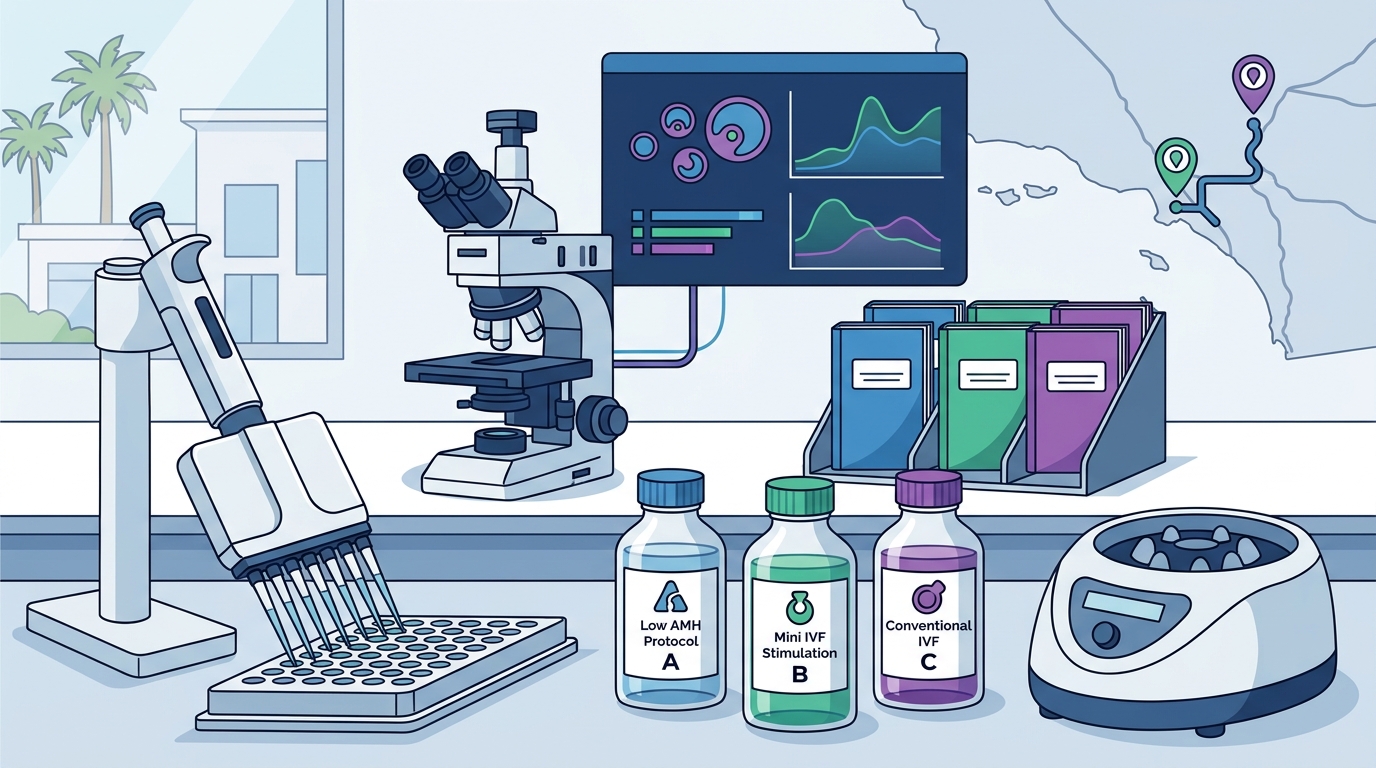
Selecting a clinic for diminished ovarian reserve requires looking beyond general success rates. A specialized clinic focuses on the specific physiology of low AMH, which involves fewer recruitable follicles. Life IVF Center utilizes a proprietary Precision IVF approach that tailors stimulation to individual ovarian reserve levels. Generalist clinics may use standard high-dose protocols that can be less effective or more stressful for patients with low reserve. You should look for providers who explicitly discuss low-AMH management strategies, such as natural cycle IVF or minimal stimulation, as part of their standard care model.
Specialization vs. Generalization
Diminished ovarian reserve is a specific clinical challenge. Clinics that treat a high volume of DOR patients develop nuanced protocols for these cases. At Life IVF Center, treatment plans are customized based on age, AMH levels, and medical history. This individualized approach is critical because a protocol that works for a patient with normal reserve may fail for a patient with low AMH. according to Canagliflozin treatment prevents
Physician Experience
The experience of the reproductive endocrinologist is a key differentiator. Dr. Frank D. Yelian, founder of Life IVF Center, has extensive experience in complex fertility cases, including poor ovarian response. When evaluating a clinic, ask how many low-AMH cycles the specific physician performs annually. High volume in this specific niche often correlates with better clinical decision-making.
Questions to Ask Before Committing
During your initial consultation, specific questions will reveal the clinic's depth of expertise. Do not accept vague answers. You need concrete data on how they handle your specific AMH level.
- What stimulation protocol do you recommend for my specific AMH level? Ask if they use conventional, minimal, or natural cycle IVF. Understand the reasoning behind their choice.
- What is your live birth rate for patients in my age group with low AMH? General success rates are misleading. Ask for age-stratified and reserve-stratified data.
- How do you handle poor ovarian response? Ask about their contingency plans if the first cycle yields fewer eggs than expected.
Verifying Credentials and Claims
Marketing claims in fertility care can be misleading. You must verify that the credentials and success rates presented are accurate and current.
Checking Physician Credentials
Verify that the physician is board-certified in reproductive endocrinology and infertility (REI). You can check board certification through the American Board of Obstetrics and Gynecology (ABOG). Ensure the physician is actively practicing and not merely affiliated with the clinic.
Validating Success Rates
Clinics often report cumulative success rates, which can be inflated by including multiple cycles. Look for data reported to the Society for Assisted Reproductive Technology (SART) or the Centers for Disease Control and Prevention (CDC). These national databases provide standardized, audited success rates. If a clinic does not report to SART/CDC, be cautious. Life IVF Center adheres to national reporting standards to ensure transparency.
The IVF Process for DOR
Understanding the workflow helps you prepare for the journey. The process for low AMH patients often differs in duration and medication intensity compared to standard IVF.
Step 1: Evaluation and Baseline Testing
Step 2: Ovarian Stimulation
For low AMH, physicians may choose a minimal stimulation protocol. This involves lower doses of gonadotropins or even no medication (natural cycle IVF). The goal is to retrieve the available follicles without causing excessive side effects or empty follicle syndrome. Monitoring is done via frequent ultrasounds and blood tests.
Step 3: Egg Retrieval and Fertilization
Eggs are retrieved via a minor surgical procedure under sedation. In low AMH cases, the number of eggs retrieved is typically lower (often 1 to 5). Fertilization occurs in the lab, often using Intracytoplasmic Sperm Injection (ICSI) if male factor infertility is present.
Step 4: Embryo Culture and Transfer
Embryos are cultured for 3 to 5 days. A single healthy embryo is then transferred to the uterus. The transfer is a simple, non-surgical procedure. You will wait approximately 10 to 14 days for a pregnancy test.
Cost Factors for Diminished Ovarian Reserve
Cost is a significant consideration. Prices vary based on the protocol used and the number of cycles required.
| Cost Component | Standard IVF | Low AMH / Minimal Stimulation |
|---|---|---|
| Medication Costs | High (High-dose gonadotropins) | Low to Moderate (Lower doses or none) |
| Monitoring Visits | Multiple (4-6 visits) | Fewer (2-4 visits) |
| Lab Fees | Standard | Standard (Retrieval and Fertilization) |
| Number of Cycles Needed | Often 1-2 | Often 2-3 (Due to fewer eggs per cycle) |
While minimal stimulation reduces per-cycle costs, patients with low AMH may need more cycles to accumulate enough embryos. Life IVF Center provides transparent pricing structures to help patients budget for their specific treatment plan. Insurance coverage varies widely and is not guaranteed.
Common Mistakes to Avoid
Patients with low AMH often make errors that delay treatment or reduce success.
Delaying Treatment
Waiting for the "perfect time" can be detrimental. Ovarian reserve declines with age. If you have low AMH, time is a critical factor. Delaying treatment by even a few months can further reduce the number of available eggs.
Choosing the Wrong Protocol
Using a high-dose stimulation protocol on low-reserve ovaries can lead to poor response and high costs with few eggs. Ensure your physician is experienced in low-AMH management. Ask specifically about their experience with minimal stimulation or natural cycle IVF.
Ignoring Male Factor
Infertility is a couple's issue. If the male partner has low sperm count or poor motility, ICSI may be required. Failing to address male factor can waste precious eggs. Ensure both partners undergo comprehensive testing.
IVF vs. Alternatives for Low AMH
IVF is often the most effective treatment for low AMH, but other options exist.
Intrauterine Insemination (IUI)
IUI is less invasive and cheaper. However, for low AMH, the number of eggs released per cycle is low. The probability of pregnancy per cycle is significantly lower than IVF. IUI may be tried for a few cycles if the male partner has normal sperm parameters, but IVF is generally recommended for faster results.
Egg Freezing
Egg freezing is a form of fertility preservation. For low AMH, the number of eggs frozen per cycle is low. It may take multiple cycles to build a sufficient bank. It is a valid option for those not ready for pregnancy, but it does not guarantee future pregnancy.
Donor Eggs
Tailoring Treatment to Your Situation
Your specific medical history influences the treatment plan.
Advanced Maternal Age
For women over 40 with low AMH, time is critical. Aggressive treatment with multiple cycles or consideration of donor eggs may be recommended. The goal is to maximize the chance of pregnancy before age-related decline accelerates.
Previous IVF Failures
If you have had previous unsuccessful IVF cycles, a second opinion is valuable. A specialist in complex cases, such as those at Life IVF Center, can review your previous records and identify why previous cycles failed. They may recommend a different stimulation protocol or additional testing.
PCOS with Low AMH
Some patients have PCOS but low AMH. This is a complex presentation. Standard PCOS protocols may not work. A tailored approach is needed to balance the risk of ovarian hyperstimulation with the need for egg retrieval.
Patient Rights and Protections
Understanding your rights ensures you are treated ethically.
Informed Consent
You have the right to fully understand the risks, benefits, and alternatives of your treatment. Ask for written consent forms that detail the specific protocol. Ensure you understand the financial implications and the possibility of no eggs being retrieved.
Embryo Disposition
You have the right to decide what happens to any remaining embryos. Discuss this with your partner and the clinic. Create a written agreement on embryo disposition in case of separation or death. This is a legal and ethical protection for your future.
Southern California Clinic Specifics
Southern California has a high concentration of fertility clinics. Understanding the local landscape helps you choose wisely.
Irvine and Orange County
Arcadia and Los Angeles
Traveling Patients
The Impact of Timing on Outcomes
Timing is a critical variable in low AMH treatment.
Age and Reserve Decline
Ovarian reserve declines exponentially with age. After age 35, the decline accelerates. If you have low AMH, starting treatment earlier is generally better. Delaying treatment by one year can significantly reduce the number of available eggs.
Seasonal Variations
Some studies suggest slight seasonal variations in fertility, but these are minor compared to age and reserve. Do not delay treatment waiting for a specific season. The most important factor is starting when you are ready and have a plan.
Long-Term Results and Expectations
Setting realistic expectations is crucial for mental well-being.
Success Rates
Success rates for low AMH are lower than for normal reserve. However, many patients do achieve pregnancy. The key is persistence and the right protocol. Cumulative success rates over multiple cycles are higher than single-cycle rates. Be prepared for the possibility of multiple cycles.
Emotional Support
Key Takeaways
- Choose a clinic with specific expertise in diminished ovarian reserve and low-AMH protocols.
- Verify physician credentials and success rates through national databases like SART/CDC.
- Ask specific questions about stimulation protocols, such as minimal or natural cycle IVF.
- Understand that minimal stimulation may reduce per-cycle costs but may require more cycles.
- Time is critical; delaying treatment can further reduce ovarian reserve.
- Consider a second opinion if previous IVF cycles have failed.
- Discuss embryo disposition and legal rights early in the process.
Frequently Asked Questions
What is the best IVF protocol for low AMH?
There is no single best protocol. It depends on your specific AMH level, age, and medical history. Minimal stimulation or natural cycle IVF are often used for low AMH to reduce side effects and costs. A specialist can determine the best approach for you.
How many eggs can I expect to retrieve with low AMH?
The number varies widely. Some patients retrieve 1 to 3 eggs, while others may retrieve 5 or more. It is difficult to predict exactly, but your physician can estimate based on your AMH and antral follicle count.
Is IVF worth it for low AMH?
Can I freeze my eggs if I have low AMH?
Yes, but it may take multiple cycles to freeze a sufficient number of eggs. Egg freezing is a valid option for fertility preservation, but it does not guarantee future pregnancy.
How much does IVF cost for low AMH in Southern California?
Costs vary by clinic and protocol. Minimal stimulation may reduce medication costs, but you may need more cycles. Life IVF Center provides transparent pricing to help you budget.
Do I need a second opinion for low AMH?
If you have had previous unsuccessful treatments or are unsure about your diagnosis, a second opinion is valuable. A specialist in complex fertility cases can provide fresh insights and alternative treatment plans.
What is the role of PGT in low AMH?
Preimplantation Genetic Testing (PGT) can help identify viable embryos. However, it reduces the number of embryos available for transfer. For low AMH, the decision to use PGT is complex and should be discussed with your physician.